



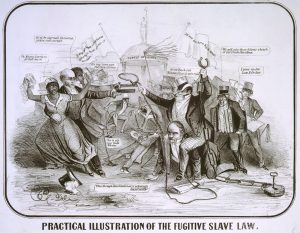
1851 Political Cartoon
(Carlisle) On Monday, September 17, 2018, the House Divided Project and the Clarke Forum for Contemporary Issues will be co-hosting a special panel at Dickinson in honor of Constitution Day that will address the topic: “The Fugitive Slave Law and the Crisis Over Immigration Policy: Assessing a Forgotten Legacy.” Panelists include noted scholars Richard Blackett (Vanderbilt), Andrew Delbanco (Columbia) and Judith Giesberg (Villanova) with project director Matthew Pinsker serving as moderator.
The controversial 1850 Fugitive Slave Law provoked a bitter national debate over open borders, due process, family separation, federal power and northern states’ rights. Our panelists will discuss those earlier controversies and assess how they might offer important insights or perspective for the current and increasingly intense debates over Trump Administration immigration policies.
Teachers and students who want to prepare for this discussion might want to begin by consulting Giesberg’s recent op-ed for the Washington Post entitled, “Jeff Sessions is Wrong. Sanctuary-city advocates aren’t like secessionists. They’re like abolitionists.” Another good starting point for understanding this historic parallel comes from law professor Jeffrey Schmitt who has written law review articles on this subject. But Schmitt also has a helpful blog post that describes why Blackett’s new book on the fugitive crisis (Captive’s Quest) is such an important addition to our understanding of how the resistance to the fugitive law evolved. Drawing historical lessons for the “resistance” was also a topic that noted historian Eric Foner explored in a recent op-ed for The Nation. Delbanco’s new and much-anticipated book on the fugitive slave law is not quite available for sale yet (War Before the War, November 2018), but audience members can preview some of his views on President Trump’s historical legacy in this roundtable from the New York Review of Books which came out at the very end of the 2016 election. Finally, for those seeking more in-depth treatments of these subjects and the historic parallels and connections between the fugitive slave crisis of the 1850s and the immigration crisis of our era, see freely available scholarly articles by Kraehenbuehl (2011), McKanders (2012), and Schmitt (2013), or shorter but context-filled recent magazine pieces in Time or Slate.
Finally, what makes this topic so especially relevant here in Carlisle is something the panelists will also address. In particular, they will describe Dickinson College’s complicated and surprisingly deep connections to the fugitive issue. In 1847, for example, the college and the Carlisle community were nearly ripped apart by a violent fugitive slave episode, involving Professor John McClintock and a network of black antislavery figures in town. It is also true that the most notorious fugitive slave commissioner of the 1850s, a man named Richard McAllister, was a graduate of the college (Class of 1840).
The combination of historical context and modern-day relevance is sure to make for a fascinating panel. The entire session is open to the public and will also be available over YouTube via live-streaming at the House Divided YouTube channel.
CONSTITUTION DAY PANEL
“The Fugitive Slave Law and the Crisis Over Immigration Policy: Assessing a Forgotten Legacy.”
Monday, September 17, 2018
Anita Tuvin Schlechter Auditorium, 7 p.m.
Panelists:
Richard Blackett, Vanderbilt University
Andrew Delbanco, Columbia University
Judith Giesberg, Villanova University
Matthew Pinsker (moderator), Dickinson College
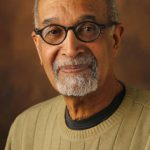
Richard Blackett
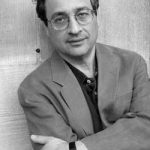
Andrew Delbanco
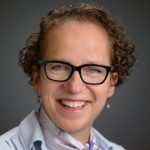
Judith Giesberg

Matthew Pinsker
Co-hosted by House Divided Project and Clarke Forum for Contemporary Issues with co-sponsorship from the Dickinson College American Studies, History and Policy Studies departments


 The HISTORY channel has just launched a
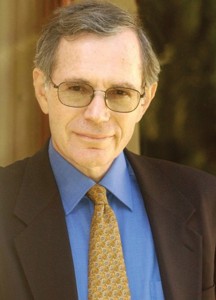
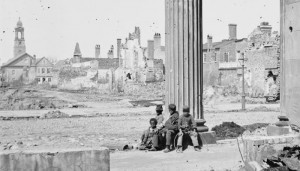 (REVISED AND UPDATED) The House Divided Project at Dickinson College celebrated its tenth anniversary in March 2016 by hosting a special conference on the Reconstruction Era, with a series of campus events headlined by Pulitzer-Prize winner Eric Foner, and featuring noted historians Gregory Downs, Matthew Pinsker, Jeffrey Rosen, and Anne Sarah Rubin. All events were streamed over YouTube and are available now via embedded viewers on this page.
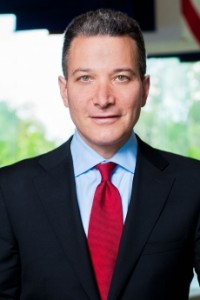 Jeffrey Rosen is the President and Chief Executive Officer of the National Constitution Center, the first and only nonprofit, nonpartisan institution devoted to the most powerful vision of freedom ever expressed: the U.S. Constitution. He is a professor at The George Washington University Law School, where he has taught since 1997. He is a nonresident senior fellow at the Brookings Institution, where he explores issues involving the future of technology and the Constitution. Rose is the author of several books including The Supreme Court: The Personalities and Rivalries that Defined America (2007). He has also just helped launch the
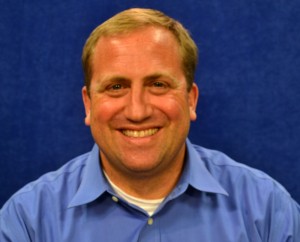 Matthew Pinsker is the Pohanka Chair for Civil War History at Dickinson College and the Director of the House Divided Project. Matt is also a fellow at the New America Foundation in Washington DC. He has previously held visiting fellowships at Strategic Studies Institute of the U.S. Army War College and the National Constitution Center in Philadelphia. Matt graduated from Harvard College and received a D.Phil. degree in Modern History from the University of Oxford. He is the author of two books: Abraham Lincoln –a volume in the American Presidents Reference Series from Congressional Quarterly Press (2002) and Lincoln’s Sanctuary: Abraham Lincoln and the Soldiers’ Home (Oxford University Press, 2003). Matt’s next book is forthcoming from W.W. Norton & Co., tentatively entitled, Boss Lincoln: Understanding Abraham Lincoln’s Partisan Leadership. On Saturday, Matt will be unveiling plans for the new Reconstruction Digital Classroom which will go online shortly after the anniversary conference.
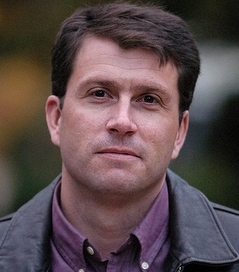 Gregory Downs studies the political and cultural history of the United States in the 19th and early 20th centuries at the University of California / Davis. He is the author or editor of several books. Downs’s latest monograph,
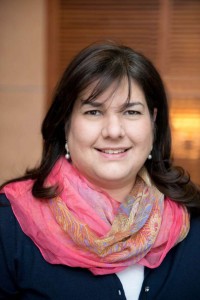 Anne Sarah Rubin is a Professor of History at the University of Maryland, Baltimore County, where she teaches courses on the Civil War, American South, and the Nineteenth Century United States. She is also the Director of the


 On Tuesday evening, April 25, 2017, the House Divided Project is hosting two major public events at Dickinson College: an open house at its studio on 61 N. West Street from 4-6 p.m. and then a special premiere of the powerful new documentary film on the legacy of lynching in the American South, “An Outrage,” at the Weiss Center for Performing Arts from 8:30 p.m. to 9:30 p.m.

