Unionism and Election of 1864
The rebellion has been a rapid educator. Congress was the first to respond to the instinctive judgment of the people, and fixed the broad brand of its reprobation upon slave hunting in shoulder straps. Then came very temperate talk about confiscation, which soon came to be pretty radical talk. Then came propositions for Border State, gradual, compensated, colonized emancipation. Then came the threat of a proclamation, and then came the Proclamation. Meanwhile the Negro had passed along from a loyal spade and pickax to a Springfield rifle. —Frederick Douglass, “The Mission of the War” (January 1864)
Timeline of Freedom
- 1861 // Contrabands
- 1861-2 // Confiscation
- 1863 // Emancipation / Amnesty
- 1864-5 // Abolition
- 1865 and beyond // Equality
The Gettysburg Convention (Nov. 18-19, 1863)
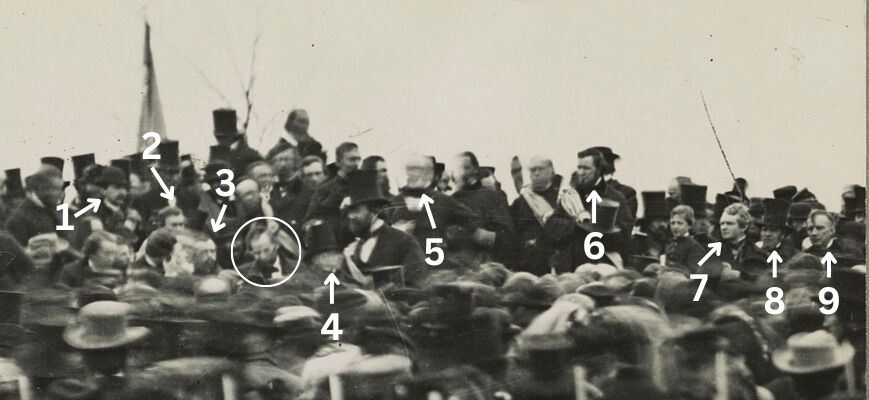
1 = Wayne MacVeagh (PA Unionist chair) // 2 = John Hay (White House aide) // 3 = John Nicolay (White House aide) // 4 = William Seward (Secretary of State // 5 = Edward Everett (Main orator, former VP candidate in 1860) // 6 = John Forney (PA editor, Unionist // 7 = Andrew Curtin (PA Gov, Unionist // 8 = Horatio Seymour (NY Gov, Democrat) // 9 = David Tod (OH Gov, Unionist)
Where was Chase? He was trying to build the Unconditional Union party with “emancipation as its cardinal principle.”
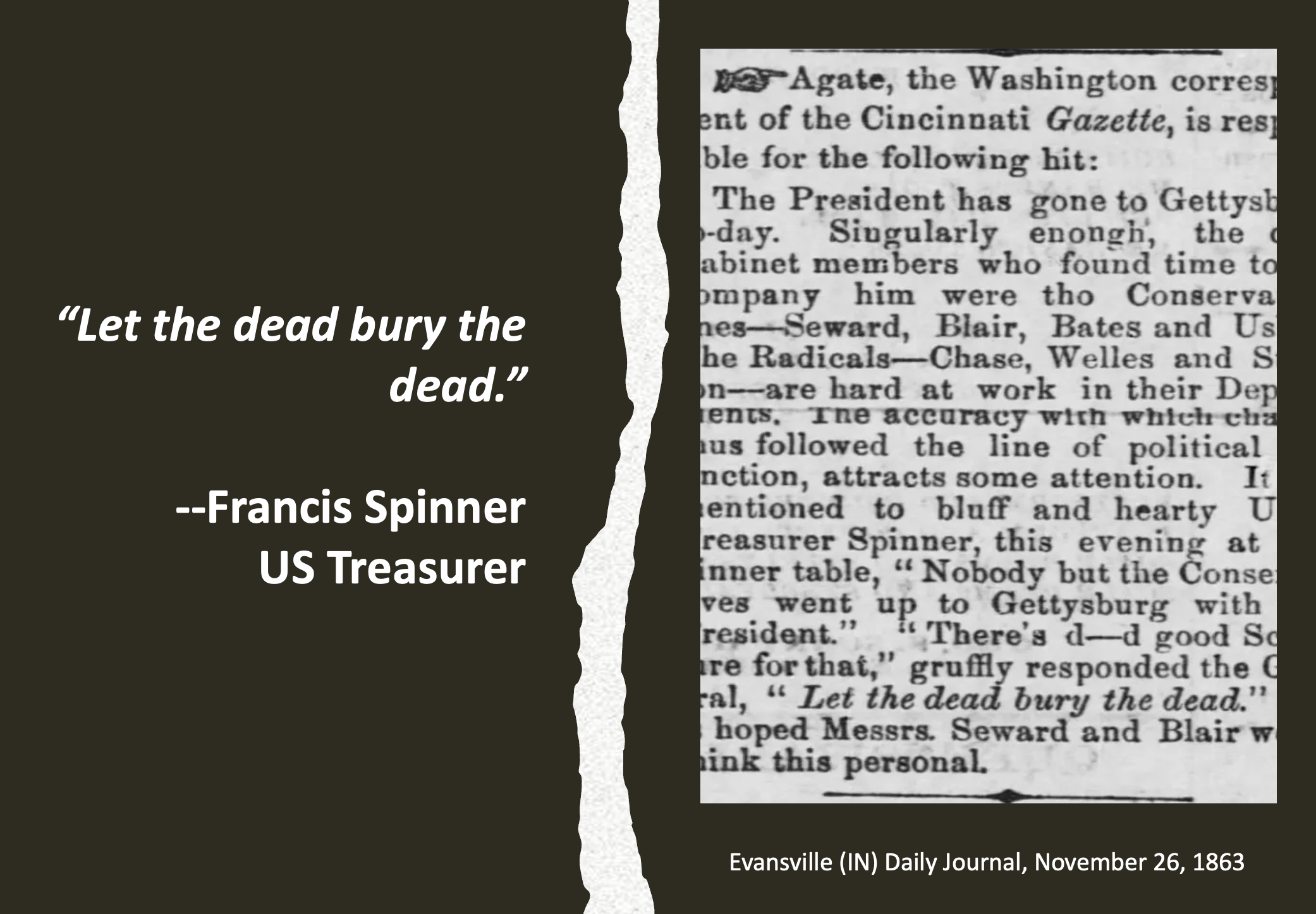
- Lincoln and Salmon P. Chase
- Lincoln and Sam Wilkeson
- Lincoln and Anna Dickinson
- Lincoln and Frederick Douglass
Abraham Lincoln believed that to “save the union,” he first had to build a Union party.
Election of 1864
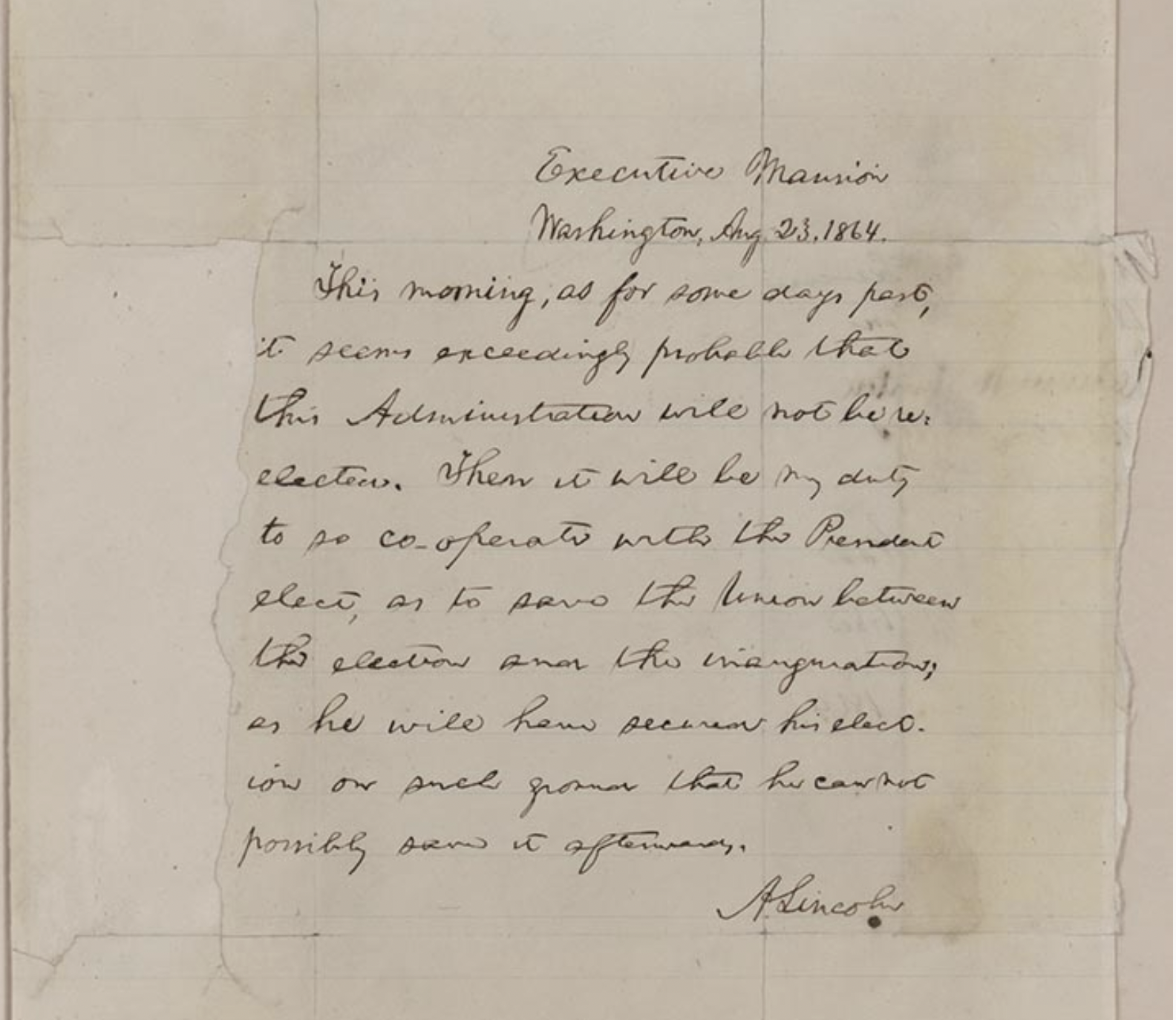
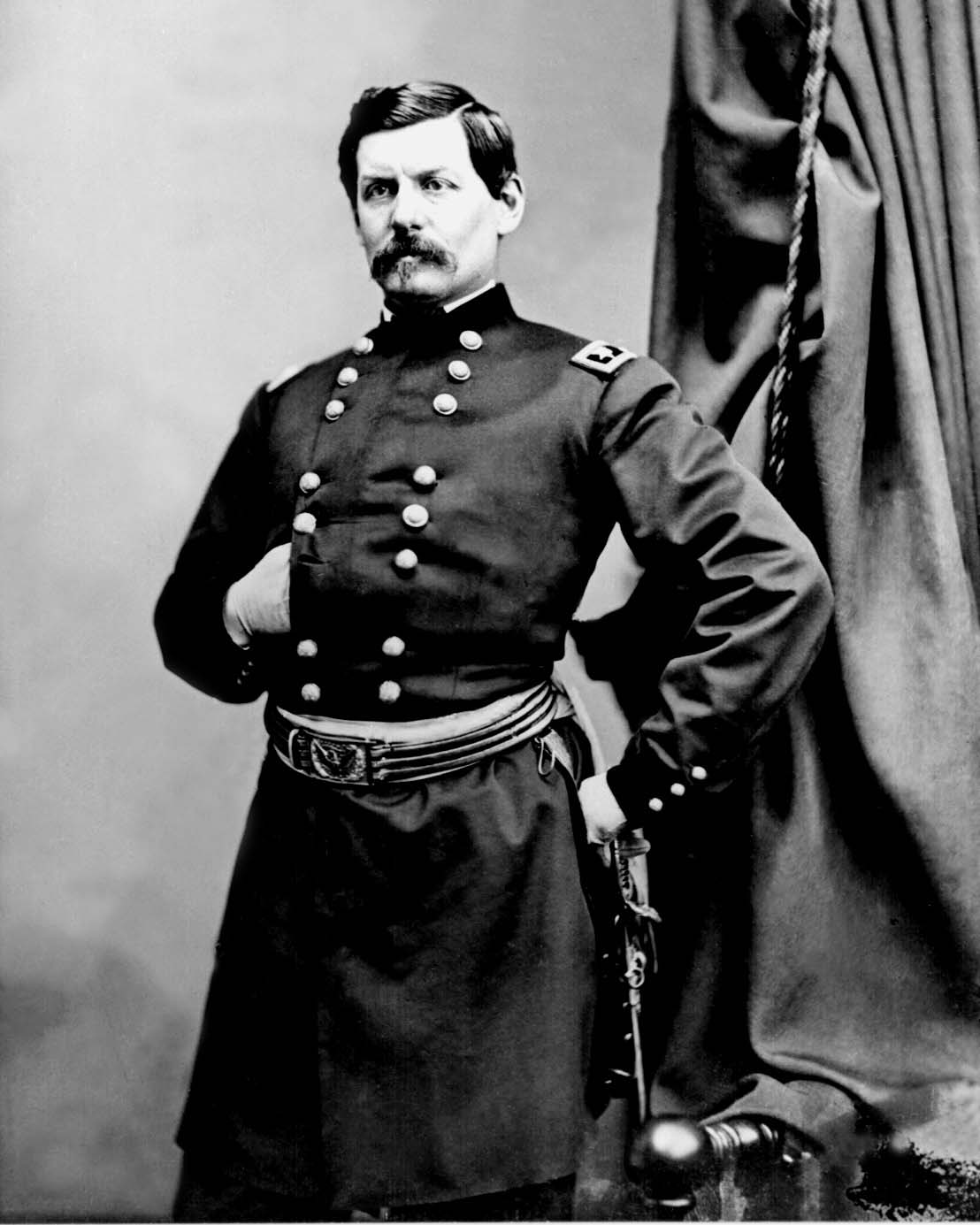
Abraham Lincoln was re-nominated for president in June 1864 by the newly organized National Union Party with Democrat Andrew Johnson as his running mate. Yet on Tuesday, August 23, 1864, Lincoln wrote a secret memorandum that began, “This morning, as for some days past, it seems exceedingly probable that this Administration will not be re-elected.” He then proceeded to sketch out a plan for cooperation with the next President-Elect in the event of his own defeat. He did not know for sure at that time, but he anticipated that his successful partisan opponent might be General George McClellan, who would in fact be nominated by the Democrats in late August 1864 as their nominee for president. He then folded the document and had his cabinet officers sign and date the back without reading the contents. Why did he write this secret memo? Who was his audience?
Tuesday, November 8, 1864
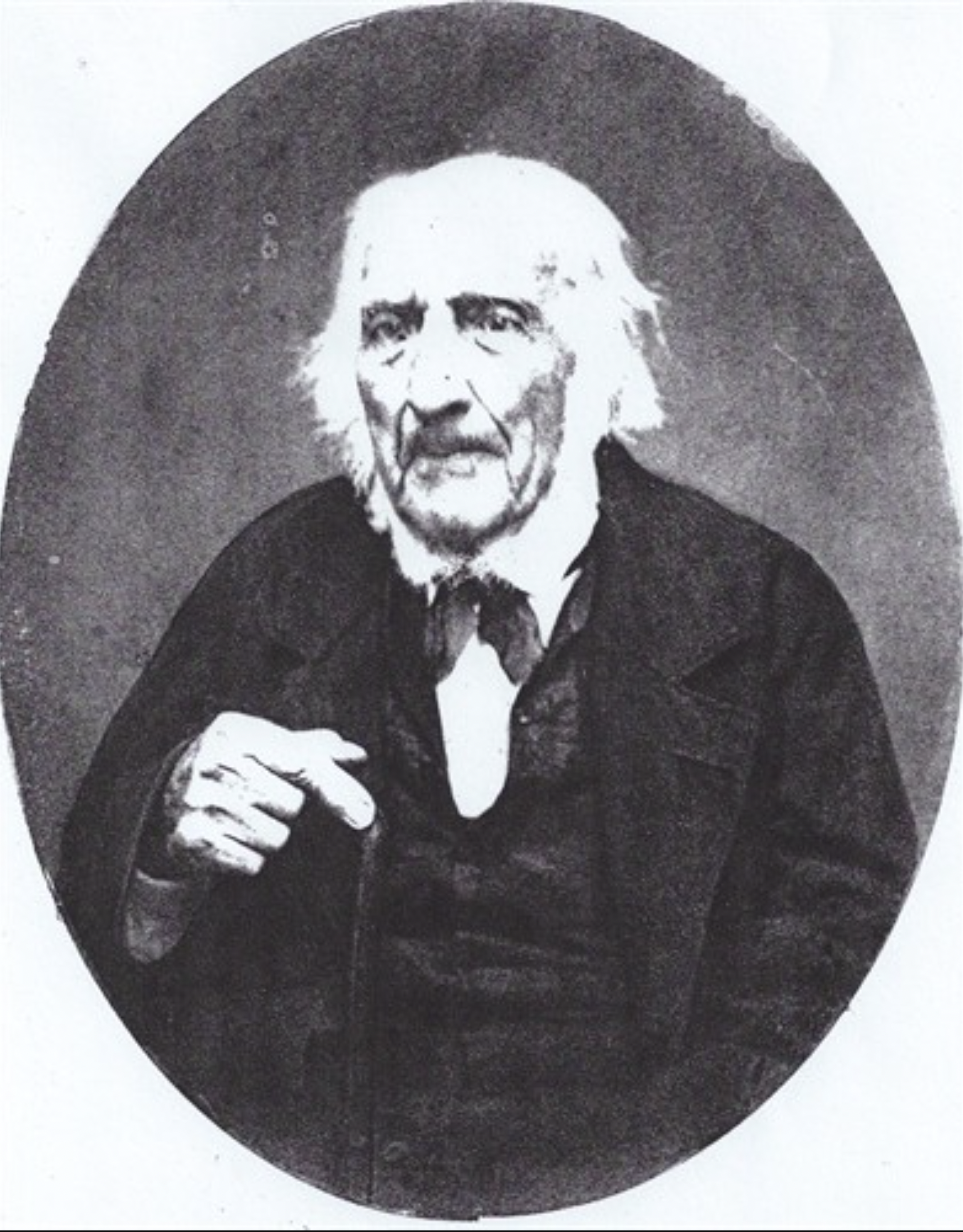
John Phillips (1760-1865)