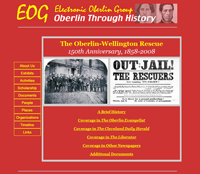
Oberlin College has a great digital exhibit on the Oberlin-Wellington Rescue that took place in September 1858. This event represented an important challenge to the Fugitive Slave Act of 1850, as residents were successful in their efforts to prevent southerners from returning fugitive slave to slavery. Some of the rescuers were arrested and their trial in 1859 attracted national attention. (Read a more detailed account of this event here). The site offers coverage of both the rescue and the trial from three newspapers – Oberlin Evangelist, Cleveland Daily Herald, and the Boston Liberator. A selection of newspaper articles from across the country are also available. Also check out other documents related to the trial, such as Charles Langston’s speech.
Oberlin College has a number of otherdigital exhibits, such as “Oberlin and Women’s Struggle for Equality” and Oberlin and “Struggle for Black Freedom.”
 This
This 

 The University of Richmond Digital Scholarship Lab’s “