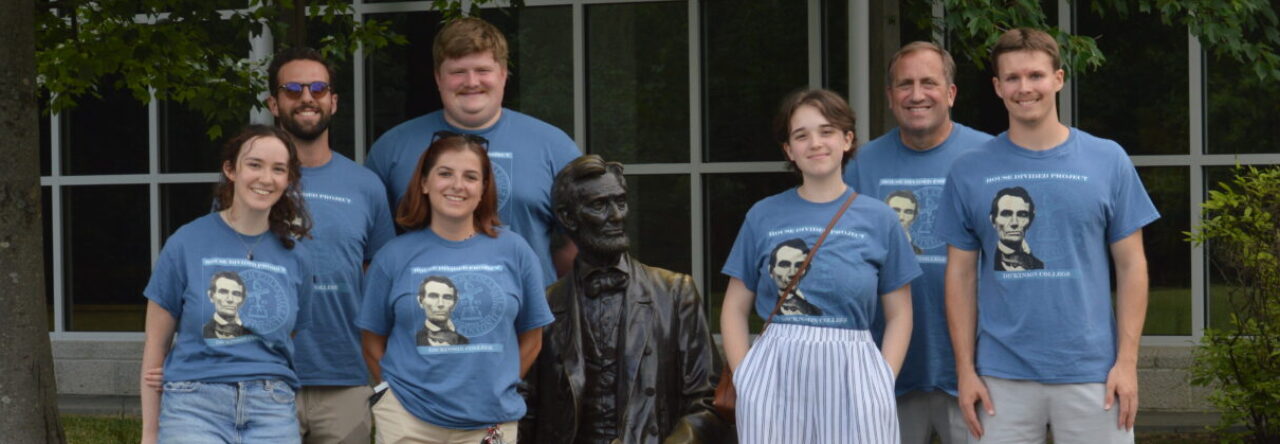
Wednesday, July 29 session
- There will be notes posted for every online session available via the home page of the 2026 projects site and recordings available on request
- The Aug 13 session has BEEN MOVED to MONDAY, AUG 17 from 7-8pm
- To receive credit, students need to successfully complete two more assignments:
- Second close reading (due August 7)
- Final Lincoln-Douglass essay (due August 21)
- Communication is key in the summer
- Notify Prof. Pinsker in advance if you will miss a Zoom session
- Request any extensions of deadlines in advance
- Take advantage of draft review (share materials by email or WP post)
- Grades will be available within about a week after assignments; transcripts will be mailed in early September; and students can register for letters of reference from Prof. Pinsker via Common App or other platforms AFTER receiving final grades
General advice for historical close readings:
-
- Pick a text that engages your historical imagination but consider focusing on either Douglass or Lincoln
- Stick to simple past tense
- Use Chicago-style footnotes (and consult Methods Center for more details
- SAMPLE FOOTNOTES FOR PINSKER:
[1] Matthew Pinsker, Boss Lincoln: The Partisan Life of Abraham Lincoln (New York: WW Norton, 2026), 27.
[2] Pinsker, 31.
-
-
- SAMPLE FOOTNOTES FOR WEBPAGES (adapted for online publication):
-
[3] Phillis Wheatley, On Being Brought from Africa (1773), Knowledge for Freedom Seminar [WEB]
[4] Wheatley [WEB]
NOTE that for articles behind paywalls, you should indicate that in brackets as well, like this [JSTOR]
-
- Always guard against plagiarism, especially when you paraphrase. REMEMBER: never summarize a source while you are looking at it. Close the book or the tab and do it from memory. And don’t use AI platforms for reading, drafting, or editing (other than spell check / grammar check / citation check). You may use AI platforms like a search engine to find sources and quick information.
- Advice for strong openings:
- Consider attempting a narrative vignette built around a snippet of quotation, like this: “Stand with anybody that stands right,” Abraham Lincoln said in 1854, “Stand with him while he is right and PART with him when he goes wrong.”
- Provide brief but effective summary context of the document under study
- Then pivot to a clear thesis statement that offers an original interpretation about the significance of the author’s writing strategy but one that you can demonstrate with evidence not only from the text itself but also from secondary sources
- Advice for strong text summaries:
- Summarize the entire text (or text excerpt) deftly using both paraphrase and snippets of quotation (provide endnotes at the end of a sequence or a paragraph)
- Don’t forget to describe the format of the text (including whether it was public or private, how it was printed or published (and provide an image if possible), and a word count)
- Always acknowledge if you are focusing only on an excerpt
- Advice for strong context sections:
- Good context requires some outside research using high quality secondary sources; remember to take advantage of Dickinson resources like our library databases (especially American National Biography Online and JSTOR)
- Judge secondary sources by the expertise of the authors (requires BYLINES) and whether the format has been peer reviewed (requires academic publishing) or at least edited (requires professional publishing)
- Always start with context information about author and audience and then consider expanding into time period essentials –but always be judicious and don’t overwhelm your analysis with too much context
- Advice for strong subtext analysis:
- The best way to decode subtext is to consider what’s left out
- The easiest way to understand what’s missing from a document is by wide-ranging comparison. For example, how is this document different from earlier documents written by the same author? How does it compare to similar documents written during the time period by other authors? What about comparing the document to previous classic documents (such as the Declaration of Sentiments with the Declaration of Independence)?
- Remember to compare backward in time (not forward). This is a historical close reading exercise.
- Advice for strong closing arguments:
- Return to the opening vignette or idea
- Reframe or rephrase the original thesis into something thoughtful –don’t just restate it.
- Multi-Media Reminders
- Don’t forget to include two to three images with captions and clickable credits, expandable (attach to media file) and formatted neatly within paragraphs or between them
-
- Don’t forget a short document video produced in WeVideo and including clear, well read audio narration, a compelling music track, carefully selected and high quality images, some nice production elements such as call out text or transitions, and a well organized credit slide
Next Session: Wednesday, August 5
- Read the introductions to both the Delbanco collection on Lincoln and the Gates / Stauffer collection on Douglass and we will begin to discuss the plans for the Lincoln-Douglass final essay
- For the final two Zoom sessions (August 17 and August 19 at 7pm), we will discuss Part III of Boss Lincoln (chapters 9-12) plus the Epilogue
Wednesday, August 5 session:
Discussion of Portable Lincoln and Douglass
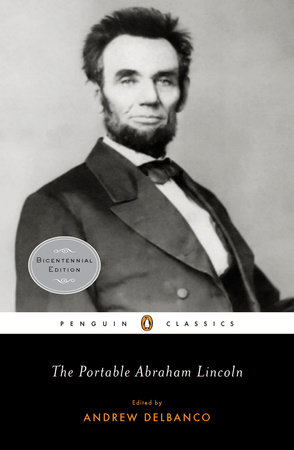 Delbanco on Lincoln:
AGREE: “The fact is that we shall never know why –or if– Lincoln’s hand trembled [when he signed the Emancipation Proclamation.” (x)
DISAGREE: “He seems to have had nightmares and fainting spells and even daytime hallucinations that foretold his own death.” (xviii)
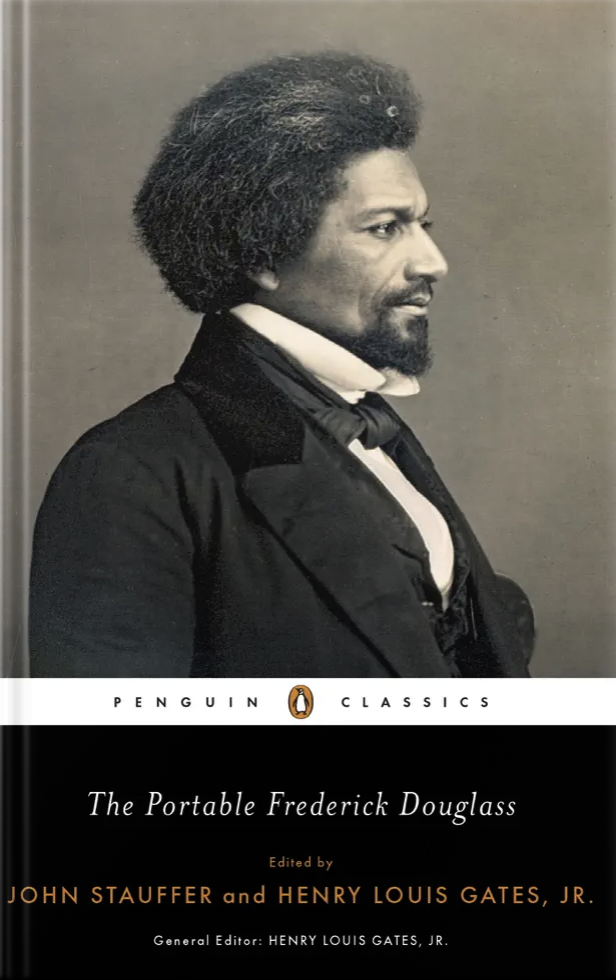 Stauffer / Gates on Douglass:
AGREE: “During his lifetime, Douglass was perhaps much better known as an orator than an author.” (xx)
DISAGREE: “Douglass’s fluid conception of the self united his evolving autobiographical art and his shifting politics.” (xxx)
Advice for the final Lincoln-Douglass essay:
“and a final essay (about 1,000 to 1,500 words or roughly 4 to 6 pages) that draws lessons about how best to achieve change in American democracy through comparing and contrasting the antislavery strategies of Frederick Douglass and Abraham Lincoln.”
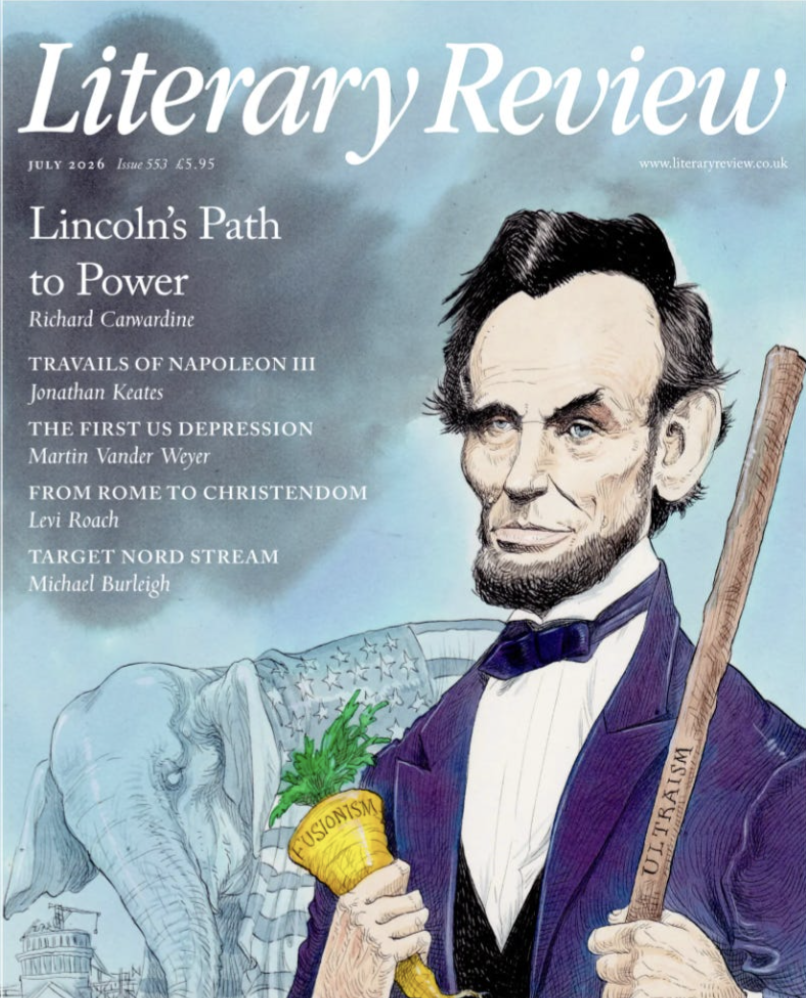
- Read parts of the secondary sources provided to you carefully, especially the relevant sections of Boss Lincoln. Think about the differences between radicals and moderates, or between ideologues (“ultras”) and pragmatists (“fusionists”). Consider how Lincoln and Douglass differed, and where they converged, and then ask if there’s any insights or lessons from that experience about how best to achieve change in American democracy.
- As always, focus your strongest writing energy on crafting an appealing opening –one that would engage fellow students. Consider using a narrative vignette or striking statement or epigraph. Provide essential context and then pivot to an a clear thesis statement that offers a debatable interpretation. In this essay –unlike earlier close reading assignment– you can (and should) consider timeless lessons for the present or the future of American democracy.
- Example of thesis framework
- Here is an example from Jordyn Ney’s essay: “The question thus became who they should appeal to most to ignite change and when they should take action to ensure a positive outcome. Much like today, American politics was a balancing game between when to wait and when to act.”
- The body of the essay should have a clear structure, reflecting change over time or chronology and a clear sense of research effort, especially in secondary sources –not just those provided to you at the seminar, but others that you can discover on your own.
-
Essays should include a descriptive title and sub-headings when helpful, properly captioned and credited images as well as Chicago-style footnotes, citing wherever relevant the primary source texts from the course syllabus as well as any secondary sources. There is no video requirement for this essay.
SAMPLE FOOTNOTES FOR PINSKER:
[1] Matthew Pinsker, Boss Lincoln: The Partisan Life of Abraham Lincoln (New York: WW Norton, 2026), 27.
[2] Pinsker, 31.
SAMPLE FOOTNOTES FOR WEBPAGES (adapted for online publication):
[3] Phillis Wheatley, On Being Brought from Africa (1773), Knowledge for Freedom Seminar [WEB]
[4] Wheatley [WEB]
-
Always remember to strive for balance: between seeing the big picture (Lincoln vs. Douglass) and highlighting your leading examples (always focus on just a few moments), between making an argument (your interpretation) and providing the essential background (context necessary for understanding by your readers), and between understanding the past and appreciating its possible insights for the future.
-
Practical tips:
-
Remember our debate on the final day of the campus program and feel free to borrow ideas from that exchange
-
Also feel free to use revised material from your earlier close reading essays when relevant
- Take special care with how you use quotations. Integrate snippets of quotation as fluidly as you can.
-
Make sure that you use at least a few compelling (and properly captioned and credited) images but do not create videos or other multi-media tools
-
Don’t plagiarize by mis-paraphrasing or by using AI-generated text.
-
-
Try to send or share with Prof. Pinsker drafts (full or partial –and at least of your opening paragraph). He will read them up to the afternoon of Thursday, August 20.
Next session: Monday, August 17 (7pm)
- Reading assignment: Part III of Boss Lincoln (chapters 9-12) plus the Epilogue
AUGUST 17: Boss Lincoln (via Substack)
 Summary of new insights
- Explanation for fusionism and ultraism (with present-day connections)
- Advice for AOC as presidential candidate
- An angry Lincoln in 1855
- Secession Crisis (and Jan. 6)
- Gettysburg “Convention” (1863)
Bonus: Mealy on Emancipation Memorial and Ali
Final Essay Timeline (see advice from 8/5 above)
- Prepare to discuss essay plans on Wednesday evening, August 19
- Submit drafts to Prof. Pinsker up to Thursday afternoon, August 20
- Request a penalty-free extension up to Friday afternoon, August 21
- No penalty-free extensions after Monday afternoon, August 24
- No penalized essays accepted after Friday afternoon, August 28
- Final evaluations and grades returned by or shortly after September 1