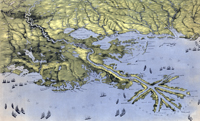
As this is Geography Awareness Week, I thought I would highlight some of the zoomable maps available on House Divided. Some of these maps provide bird-eyes view of various towns and cities – including Alton, Cedar Rapids, Des Moines, Harrisburg, New York, Philadelphia, Providence, and Washington D.C. In the Springfield map, you can look for Abraham Lincoln’s house (# 29 on the map). Other maps provide nice overviews of coastlines, such as Louisiana, the Carolinas, and Virginia. House Divided also has zoomable maps of battlefields, including several of Gettysburg. Click on “Zoomify” at the top right of a map in House Divided in order to view it as a zoomable map.

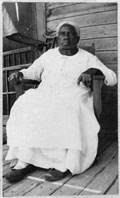 Approaching the topic of slavery can be difficult, especially at the elementary school level when these issues might be discussed for the first time. Posted by the National Endowment for the Humanities, “
 “
“